
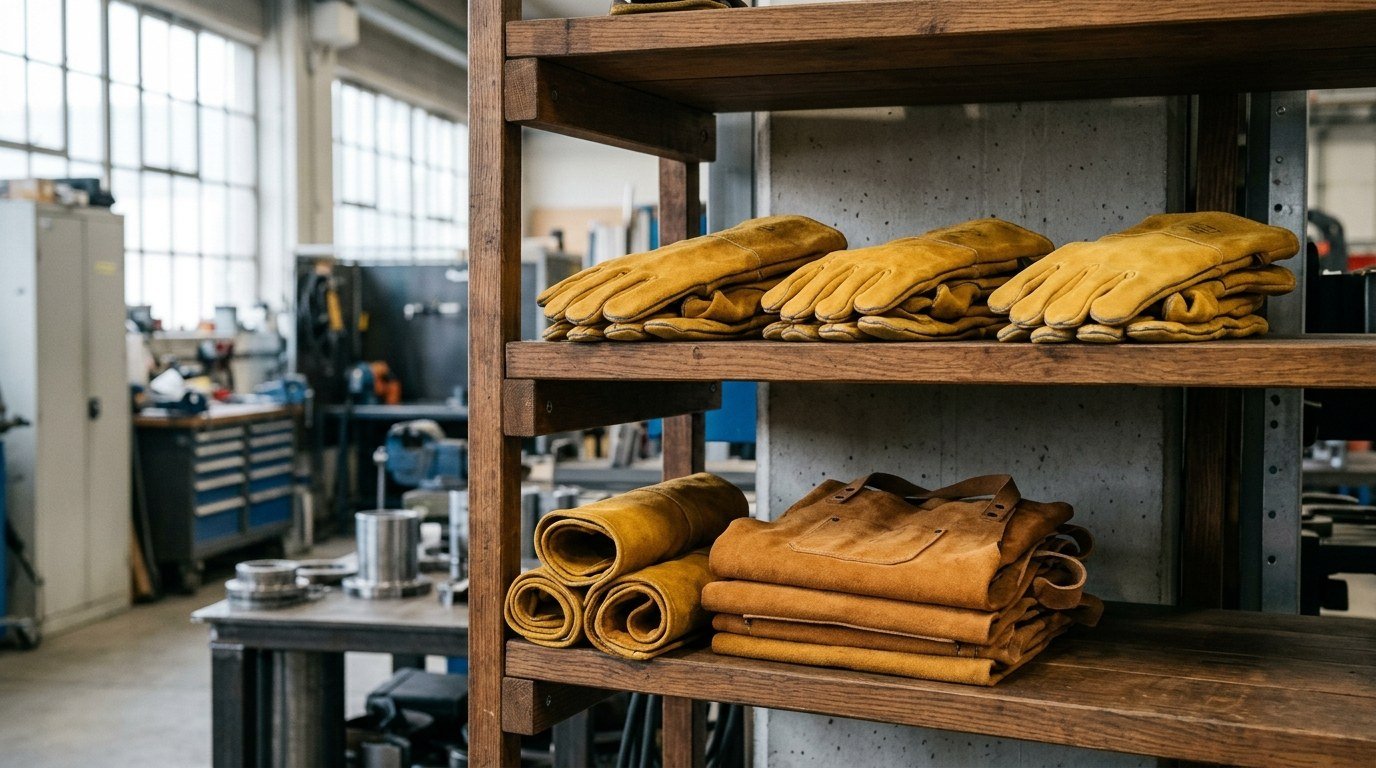
Industrial leather is a durable biological composite of interlocking collagen protein fibers fortified with tanning chromium salts and natural conditioning oils (fatliquors). While exceptionally resilient against physical impact, thermal spikes, and hot metal spatter, leather remains vulnerable to ambient humidity, mildew, chemical degradation, and excessive drying.
1. Warehouse Storage & Climate Protocols for Bulk Importers
For international safety equipment distributors, master cartons of leather gloves often spend 25 to 45 days inside ocean shipping containers followed by months in distribution warehouses. Preventing humidity-induced mold and cardboard moisture absorption requires strict adherence to storage standards:
Maintain warehouse relative humidity strictly between 45% and 60% at 18°C–25°C. Relative humidity exceeding 70% accelerates fungal growth (white bloom/mildew), while humidity below 35% causes natural tanning oils to evaporate, resulting in leather brittleness.
Never store master cartons directly on concrete flooring, which leaches subterranean moisture. Elevate cartons on wooden or plastic pallets at least 15cm off the ground, leaving a 20cm clearance between pallet stacks and exterior facility walls.
2. Safe Cleaning: Removing Slag, Grime & Industrial Greases
Workers frequently make the mistake of soaking leather work gloves in buckets of water or using petroleum-based solvents to strip grease. Water washes away essential fatliquors, causing the leather to dry into stiff, unyielding cardboard. Solvents dissolve the tanning agents, causing immediate delamination.
Allow spatter beads and heavy slag to cool completely. Use a stiff nylon or brass wire bristle brush to gently dislodge encrusted slag pellets from the suede nap of split cowhide.
For grain cowhide driver gloves and goatskin TIG gloves, wipe surface grease using a barely damp microfiber cloth and pH-neutral glycerin saddle soap. Never submerge in water.
If gloves become damp from perspiration or rain, hang them in a well-ventilated, shaded indoor area. Never place leather gloves on radiators, heaters, or open flames, which permanently shrinks collagen fibers.
3. Pre-Shift Safety Inspection Checklist
Plant safety supervisors should train workers to perform a 60-second visual and tactile inspection prior to each welding or fabrication shift:
| Inspection Checkpoint | Defect Sign | Risk Level | Action Required |
|---|---|---|---|
| Welted Seams & Kevlar Stitching | Burned thread, popped stitches, exposed welting gap | High (Spatter Entry) | Immediate glove replacement; do not tape or re-sew |
| Palm & Thumb Crotch Thickness | Friction glazing, paper-thin worn spots (< 0.6mm) | Severe (Burn Risk) | Retire from heavy welding; reassign or discard |
| Heat Embrittlement (Glazing) | Hardened, brittle leather that cracks when flexed | Medium (Loss of Grip) | Replace; brittle leather shatters under sharp metal impact |
| Inner Fleece Lining | Torn, balled up, or bunched lining exposing bare hide | Medium (Conductive Heat) | Discard; bunched lining prevents rapid glove removal during emergency |
4. When to Retire Leather PPE: The Replacement Threshold
Attempting to stretch the service life of worn-out safety gloves creates catastrophic liability. Discard and replace leather PPE immediately under any of the following conditions:
- Any visible hole, puncture, or cut exceeding 2mm through the leather shell.
- Stitch blowout along the thumb crotch or finger tips that allows direct skin contact with hot surfaces.
- Saturated oil contamination that creates a flammable wick hazard around welding torches.
- Permanent hardening where finger curvature cannot be straightened without severe resistance.
Establish a Scheduled Leather PPE Supply Chain
Ensure your plant floor never runs short of fresh, factory-tested protective gloves. PNB Leather coordinates recurring container dispatches, custom poly-bag packaging with silica packs, and guaranteed batch uniformity.